
THE BRIDGE TO COLLEGE
Waiting For College Decisions – What It Feels Like

January through March: the time after applications is filed but before most admissions decisions are released. The clock ticks so slowly. The waiting is cruel, even harder on parents than it is on students. For those who did not achieve their “early” colleges, it’s worse than you can imagine.
We say it all the time – line up a good safety school that will accept you early in the season – and life will be easier (and your essays will be better because of the confidence). Unfortunately, few people heed this advice. Gerard did, and at the beginning of the admissions season, he got a great engineering school: the Colorado School of Mines. Even so, wishing and wanting and waiting is just awful.
Here are some of Gerard’s thoughts, grabbed from after his first “win” but before his “better” schools announced their decisions. Feel what he felt, that weird balance of fear and confidence, but remember: this was with a solid win in his pocket.
Like most, Gerard’s racing thoughts began with a healthy dose of anguish:
“I’ve been reflecting recently, and I realize that a lot of the time when I ask you for advice, I’m actually looking for assurance. I’m scared … I’m nervous … I don’t know what’s going to happen … OMG …is my SAT score high enough? Was that extracurricular the right one? Am I chopped?!
“The waiting season feels like I keep taking a voluntary dive deep underwater, then when I swim back to the surface, right as I’m about to take a much-needed gulp of air, something drags me back under!”
Then his mind started thinking that all the thinking was a necessary evil on the way towards victory:
“In this period of anguish, maybe it’s good that I don’t know what will happen. Imagine that every single time you boot up your favorite game, you know for certain that you will win. Very quickly, you would lose interest in that game. Imagine that when you begin the next episode of your favorite binge-watch, you know what’s going to happen from the first minute and it’s exactly what you want to happen.
“When it comes to admissions, knowing the exact steps to take and the exact order to take them, you would get bored and disinterested very quickly. Wouldn’t that be a miserable existence?”
In his search for solace, Gerard even became philosophical:
“Maybe being uncertain is a privilege. Aren’t we lucky not to know and live life anyways? Knowing that many questions will forever remain unanswered, we have the luxury of asking ourselves difficult questions. In a way, uncertainty makes life worth living!”
But this feigned positivity didn’t last long:
“Hey, I’ve been having some good luck recently, so maybe it will extend to next week’s decisions! Or am I insane? Maybe I’m just yapping because of my fear ... hahahahaha….”
Maybe it’s not insanity, perhaps folly or frenzy or just absurd. The future is unpredictable, and so are admissions decisions. Unlike universities in most of the world, U.S. colleges generally do not make decisions in a linear fashion based upon grades and test scores. Moreover, their decisions are not a judgment on a student’s value or an adult’s parenting.
Trust me: waiting for their decision can be even more difficult than understanding their decision. So, what to do?
My first advice is to “be healthy.” Get enough sleep, exercise appropriately, eat the right foods … you know what to do. And, especially for parents, consider a vacation in February (which is by far the cruelest month of waiting).
Second, re-read your application essays. Remind yourself of the quality of your admissions work. Our students write world-class essays. They make our hearts rise and re-reading them will rejuvenate your soul.
Third, enjoy the ride. High school is almost over. That social institution, for better or worse, has been your daytime home for almost the entirety of your life. Things change when you graduate. Current friends become acquaintances and then memories, not daily companions. The best mental and emotional help occurs when you live in the present, not when you dwell on the past or hope for the future.
Trust me: your success will be based upon your good work, not on the brand name of a university, a major you select, a class or a professor. Your life will be determined by you, not by others.Robert LeVine is the founder and CEO of University Consultants of America, an independent educational consultancy assisting students around the world with applications to colleges, universities and graduate schools. For more information, call University Consultants of America, Inc. at 1-800-465-5890 or visit www.universitycoa.com
FAMILY MATTERS
Communities and Milestones
By Anu Verma Panchal
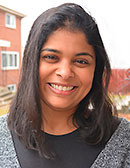
A few months ago, I had the good fortune to stand by my parents’ side as they celebrated a significant milestone, their golden anniversary. One of my favorite parts of the event was that in addition to uncles, aunts and cousins, we had with us their closest friends, the extended “framily” that had helped my parents recreate a sense of home and family when they were thousands of miles away from the place of their birth.
Circa 1980, with a toddler and 6-year-old in tow, my parents moved to a little town in Zambia called Kabwe. They knew no one and nothing about this new country beyond my dad’s offer letter and one phone call with a relative who had once lived in Africa.
But on their very first evening, there was a knock at the door. It was a young Malayalee couple with two little boys our age. Hearing that a new family from Kerala had arrived, they had stopped by to welcome us. From that one introduction, my parents were immediately absorbed into a group of friends.
The same thing happened every time we moved towns. The news of our impending arrival reached before we did, and we were pulled into existing Malayalee social circles. Our weekends were spent at each other’s houses, uncles in safari suits swilling whiskey, aunties in sarees holding deafening conversations while we ran around and played. As the years passed, my parents grew into the veterans who welcomed new families and organized the elaborate cultural events that gave the community a sense of home away from home.
And all around town – and across the South Asian diaspora – others were doing the same thing. In Tamil, in Bangla, in Hindi, they created communities that served a familial function for each other. Community building seems to be in our genes. Or, as a friend once told me, “We’re like goats ... we can only travel in packs.”
During the college years and in my early 20s, plugging into the local desi community was nowhere close to being a priority; in fact, I reveled in the freedom from it. It was irritating, even, to see the insularity that I imagined permeated those associations. Why move to another country and only hang out with the same people? Why not at least try to assimilate?
It was only when I became a parent that I found myself searching, maybe even yearning, for some small level of connection. I wanted my daughters to learn Bharatanatyam like I had, wanted them to celebrate Hindu holidays and go to the temple occasionally. Does that mean that I want my communities to be restricted by ethnicity, language or religion? Certainly not. I am blessed with close “framily” from many backgrounds, and I enjoy Gasparilla as much as I do Onam and Navaratri.
Yet I am grateful for the generations who came before we did and established everything from the Tampa India Festival to the India Cultural Center so that we now have the option to dip a toe, an ankle or our whole selves in cultural life if we so desired.
A week before my older daughter was due to leave for college, I took her on one of our habitual visits to the Hindu temple here in Tampa. By a happy coincidence, the pujari on duty that day was the same one who had presided on the day that we had taken her on her first temple visit when she was a 6-month-old baby. “You’re the one who carried her to the front of the room when she was born, and now she’s starting college,” I told him. He beamed. “Look at that!” he marveled.
Look at that indeed. That kind of continuity doesn’t just happen. It’s the result of hard work from a lot of people who came before us, many of whom we’ll never even know. The roots they put down gave us the luxury to pick and choose how much we want to hold on to, because some variation of it has been preserved here for us.