
THE BRIDGE TO COLLEGE
What Juniors (and Parents) Need to Know About College Admissions

It’s 11th grade, and for better or worse, it’s time to get serious about college. That can be overwhelming, so let us simplify things for you.
First please understand how U.S. universities select underclassmen. Unlike other countries, the U.S. offers two parallel education systems: private and public. Whereas public universities place a premium on “objectivity” – your grades and test scores prevail – private colleges evaluate applicants more holistically. Although your qualifications are important for private schools, that’s just their starting point. What they really value is how applicants will contribute to their campus communities. For that reason, private colleges give applicants separate grades for academics, extracurriculars and personality.
Yes, personality is important to them, and it’s unavoidable that humans use human emotion in reading essays, recommendation letters, counselor reports and interview reports. In the industry, it’s a concept known as “reader love.” If you love someone, you love them regardless of their resume, but if you don’t love them enough … well, those people get rejected by admissions offices. Admissions is much more like dating than you might appreciate.
Note: holistic admissions is not random, but it is subjective. Those essays that students write really matter!
Also note: essays are not writing samples. They are messaging. What matters is your content, as absorbed by the reader. Absent total disaster, perfect grammar really does not matter.
Of course, 11th graders won’t likely start writing any essays until May or June. What should happen now?
Before we address what you should do, please understand what your high school counselor will – and will not – do. Remember, they work for the school, not for you. Especially in private schools, they have the ability to “push” the right students towards certain colleges, and that may or may not be you. They cannot help you if they do not know you. Please get to know them well, explain your thoughts, ask for advice … do the necessary to let them embrace your candidacy.
As for your essays, counselors will likely review your main essay (the Personal Statement), but not your other (supplemental) essays. They will likely coach you to do better in certain places, but they probably will not edit your words. They will offer constructive criticism, because if they don’t “help” you, and then you don’t get results … they get in trouble. So, if you have written what you believe to be a great essay, and they disagree, please take their suggestions to heart while making your own decisions. Remember, this is your future, not theirs.
As for developing your “college list,” understand that the list inevitably changes throughout the application season. Because you won’t likely select your college until April – after the college decisions are announced -- everything done before you place a deposit on May 1 is just collecting options that might be good for you. Make your best decision after learning more about colleges and more about yourself. Trust us: people change their minds at the very end.
How do you understand whether a college fits your needs? Do not rely on rankings; those are created for business purposes and are not trustworthy. Instead, understand the different institutional structures (is the school a “castle” or an open field?); the different curricular structures (general education, core curriculum, or open curriculum?); the culture on campus; and the opportunities off-campus.
The first part of your research should happen online. Reverse-engineer the admissions website, review their social media, dig deep for department newsletters. The second part of your research should be human. Talk to students, alumni and … call the admissions office. They actually want to speak with you!
Should you take a tour? It’s not necessary, and it can be distracting. For the university, tours are marketing opportunities, and your experience can be influenced greatly by the caliber of their professionals and volunteers, the other people visiting on that day, and even the weather. Because a few hours on campus is a lousy data set, tours should not be the basis of “yea or nay” decisions about schools. Instead, think of your visit as research for a decision to be made later.
You can tour if you wish, but you do not need to take an official tour. You can easily walk a campus yourself. However, if you do want an official tour, register early (they fill up fast) and try not to tour when the college is out on break!Robert LeVine is the founder and CEO of University Consultants of America, an independent educational consultancy assisting students around the world with applications to colleges, universities and graduate schools. For more information, call University Consultants of America, Inc. at 1-800-465-5890 or visit www.universitycoa.com
FAMILY MATTERS
Communities and Milestones
By Anu Verma Panchal
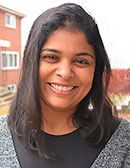
A few months ago, I had the good fortune to stand by my parents’ side as they celebrated a significant milestone, their golden anniversary. One of my favorite parts of the event was that in addition to uncles, aunts and cousins, we had with us their closest friends, the extended “framily” that had helped my parents recreate a sense of home and family when they were thousands of miles away from the place of their birth.
Circa 1980, with a toddler and 6-year-old in tow, my parents moved to a little town in Zambia called Kabwe. They knew no one and nothing about this new country beyond my dad’s offer letter and one phone call with a relative who had once lived in Africa.
But on their very first evening, there was a knock at the door. It was a young Malayalee couple with two little boys our age. Hearing that a new family from Kerala had arrived, they had stopped by to welcome us. From that one introduction, my parents were immediately absorbed into a group of friends.
The same thing happened every time we moved towns. The news of our impending arrival reached before we did, and we were pulled into existing Malayalee social circles. Our weekends were spent at each other’s houses, uncles in safari suits swilling whiskey, aunties in sarees holding deafening conversations while we ran around and played. As the years passed, my parents grew into the veterans who welcomed new families and organized the elaborate cultural events that gave the community a sense of home away from home.
And all around town – and across the South Asian diaspora – others were doing the same thing. In Tamil, in Bangla, in Hindi, they created communities that served a familial function for each other. Community building seems to be in our genes. Or, as a friend once told me, “We’re like goats ... we can only travel in packs.”
During the college years and in my early 20s, plugging into the local desi community was nowhere close to being a priority; in fact, I reveled in the freedom from it. It was irritating, even, to see the insularity that I imagined permeated those associations. Why move to another country and only hang out with the same people? Why not at least try to assimilate?
It was only when I became a parent that I found myself searching, maybe even yearning, for some small level of connection. I wanted my daughters to learn Bharatanatyam like I had, wanted them to celebrate Hindu holidays and go to the temple occasionally. Does that mean that I want my communities to be restricted by ethnicity, language or religion? Certainly not. I am blessed with close “framily” from many backgrounds, and I enjoy Gasparilla as much as I do Onam and Navaratri.
Yet I am grateful for the generations who came before we did and established everything from the Tampa India Festival to the India Cultural Center so that we now have the option to dip a toe, an ankle or our whole selves in cultural life if we so desired.
A week before my older daughter was due to leave for college, I took her on one of our habitual visits to the Hindu temple here in Tampa. By a happy coincidence, the pujari on duty that day was the same one who had presided on the day that we had taken her on her first temple visit when she was a 6-month-old baby. “You’re the one who carried her to the front of the room when she was born, and now she’s starting college,” I told him. He beamed. “Look at that!” he marveled.
Look at that indeed. That kind of continuity doesn’t just happen. It’s the result of hard work from a lot of people who came before us, many of whom we’ll never even know. The roots they put down gave us the luxury to pick and choose how much we want to hold on to, because some variation of it has been preserved here for us.
.